
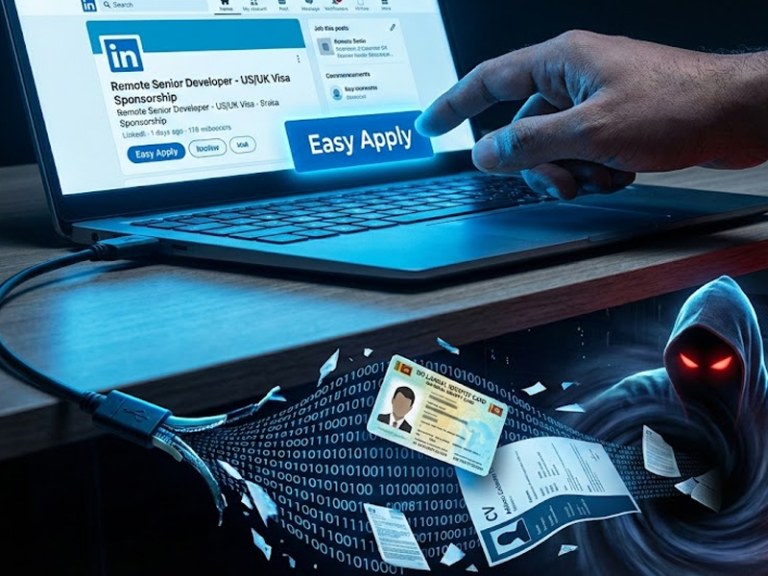
Did you know these recruiting websites collect your data and resell it?
The “Easy Apply” button is the greatest con in the modern Sri Lankan corporate struggle. It sits there, bright blue and seductive, promising that a better life, a dollar-pegged salary, a skilled migration visa, an escape from the daily grind in Colombo, is just one click away. You click it. You feel productive. You tell your parents you “applied to ten foreign companies today.”
You didn’t. You just threw your personal data into a black hole.
We need to stop pretending LinkedIn is a benevolent career counselor. It isn’t. Recent analysis suggests the platform has mutated into a data-harvesting engine fueled by “Ghost Jobs”, vacancies that exist only to keep share prices up and your hopes high. For a Sri Lankan workforce desperate for opportunities, this isn’t just annoying. It’s a trap.
The Ghost in the Machine
Here is the dirty secret corporate recruiters won’t tell you: they aren’t hiring. Not really. Estimates now suggest that anywhere from 30% to 50% of job listings on LinkedIn are fake. They are “Ghost Jobs.”
Why post a job you won’t fill? Because perception is currency.
Companies keep these listings live to signal growth to investors. If a tech firm in the US or Europe has zero open positions, Wall Street thinks they are stagnant. So, they post a “Senior Developer” role. They collect 500 resumes. They interview nobody. The stock price holds. Meanwhile, you are sitting in Nugegoda, refreshing your email, wondering why your skills aren’t good enough.
It’s not your code. It’s their fraud.
Internal politics play a role too. Managers post jobs to placate overworked teams, offering a false promise that “help is coming.” It never arrives. But for you, the damage is real. You waste hours tailoring a cover letter for a vacancy that is nothing more than corporate theatre.
The Data Harvest
If wasted time was the only cost, we could live with it. But you are paying with something far more valuable.
Sri Lankan CVs are notoriously detailed. We put everything on there: full home addresses, phone numbers, sometimes even National Identity Card (NIC) numbers. When you fire that PDF off to a “Ghost Job,” who receives it?
Often, nobody. Or worse, a data broker.
Scammers have weaponized this ecosystem. They set up fake company profiles, post attractive remote jobs, and wait. You upload your life history. They take it.
Identity Theft: Your NIC and address are now floating in a database.
AI Training: Your painstakingly written work history is free fodder for training the next generation of Large Language Models.
Targeted Phishing: Expect a WhatsApp message soon offering a “part-time job liking YouTube videos.” They know you’re looking. They know your industry. You gave them the script.
The Visa Mirage
For those eyeing migration, the situation gets darker. Western labor laws often require companies to prove they couldn’t find a local worker before they sponsor a visa for someone like you.
So they post the ad. They make the requirements impossible or absurdly specific. They reject every local applicant, and every foreign one too, just to tick a regulatory box so they can hire the person they selected months ago.
You aren’t a candidate. You are a statistic used to justify someone else’s hiring process.
Stop Being a “Poser”
LinkedIn loves to sell us the idea that “visibility” equals success. We see the “Open to Work” green banners and the desperate, self-congratulatory posts about completing a two-hour webinar.
It reeks.
Recruiters privately admit that the “Open to Work” banner often signals desperation, not availability. The algorithm encourages us to become “posers”, performative professionals who spend more time posting about work than doing it. In a small professional community like Sri Lanka, reputation travels faster offline than online. The loudest voices on your feed are rarely the most competent; they are just the most available.
How to Beat the Rigged Game
Does this mean you delete your account? No. But you stop playing by their rules. Treat LinkedIn like a hostile environment, not a networking party.
Kill the “Easy Apply” Habit: If you see a job, go to the company’s actual website. If the job isn’t listed on their internal “Careers” page, it doesn’t exist. Close the tab.
Sanitize Your Public Profile: Remove your phone number. Remove your address. Never, ever put your NIC number on a public CV. Give them that info only after you have spoken to a human being.
Verify the Recruiter: Use reverse image search on the recruiter’s profile photo. Is it a stock image? Is their profile three weeks old? Block them.
Go Offline: This sounds archaic, but it works. In Colombo, a handshake at a legitimate industry meetup or a referral from a university batchmate is worth a thousand “Easy Apply” clicks.
The system is broken. Stop feeding it your data. Stop valuing yourself based on its silence. The jobs might be ghosts, but your career doesn’t have to be one.

